
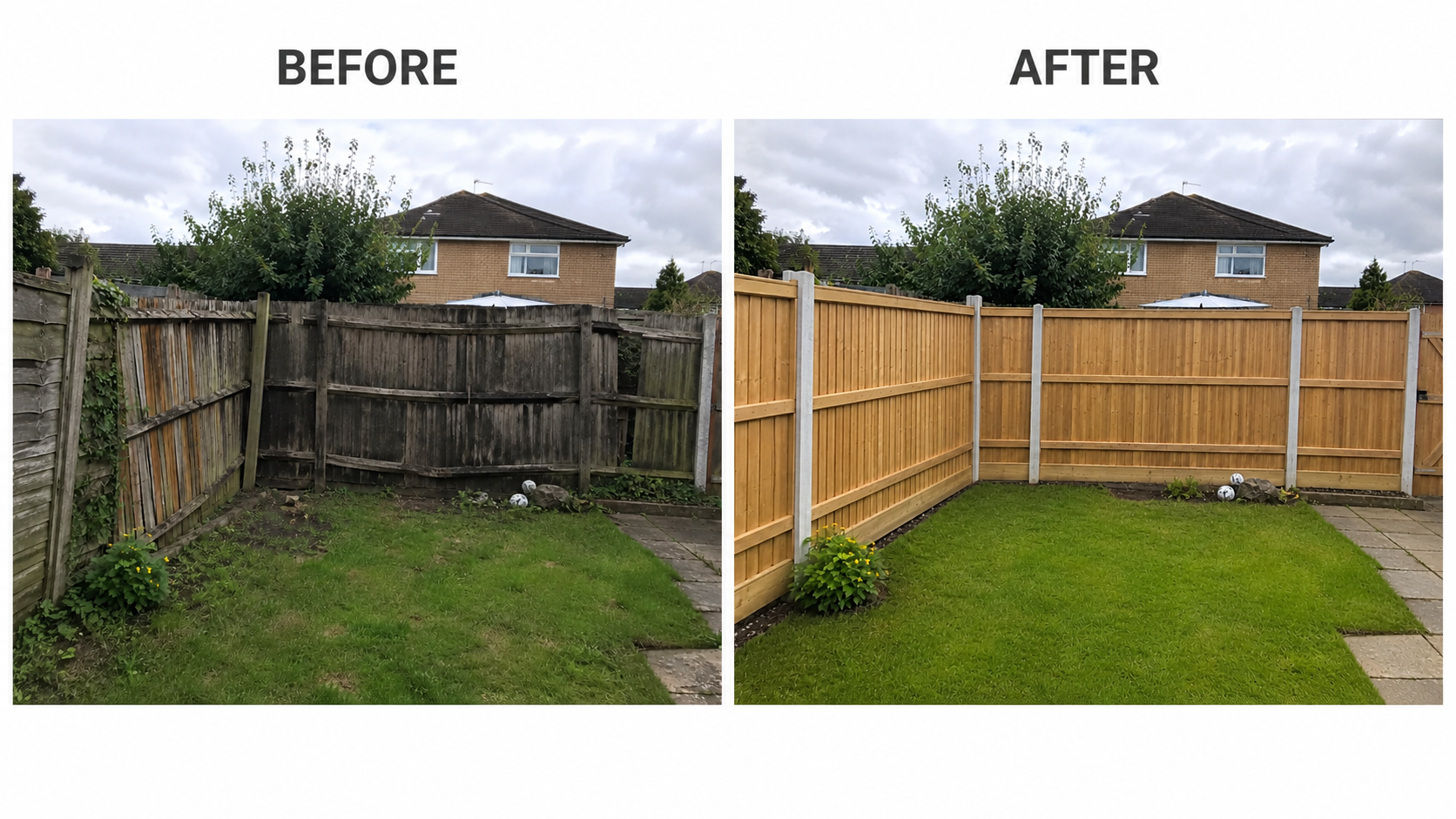
Fencing Options for Wirral Gardens
The Best Fencing Options for Wirral Gardens
Choosing the right garden fence can make a major difference to the appearance, privacy and security of your property. A well-designed fence helps define the boundaries of your garden, creates a more private outdoor space and provides a practical barrier for children and pets. It can also improve kerb appeal and give the whole garden a cleaner, more finished look.
For homeowners across Wirral, the best fencing option will depend on several factors, including the size of the garden, the level of privacy required, the style of the property and the amount of maintenance you are prepared to carry out. Local weather conditions should also be considered, particularly in gardens that are exposed to strong winds or coastal air.
This guide explains some of the most popular fencing options for Wirral gardens and how to choose the right solution for your home.
Traditional Timber Fence Panels
Timber fence panels remain one of the most popular choices for residential gardens. They are widely available, suitable for many different styles of property and can provide good privacy at an affordable price.
Standard timber panels are normally installed between wooden or concrete fence posts. They are available in various heights and designs, making them suitable for front gardens, rear gardens and side boundaries.
One of the main advantages of timber fencing is its natural appearance. It works well with lawns, planting, decking and traditional garden designs. Timber can also be painted or stained to complement sheds, gates and other outdoor features.
Popular timber panel styles include:
- Waney-edge panels
- Overlap panels
- Closeboard panels
- Decorative lattice-top panels
- Horizontal slatted panels
Although timber fencing is attractive and versatile, it requires some maintenance. Applying a suitable wood treatment can help protect the panels and maintain their appearance. Any damaged or loose sections should be repaired promptly to prevent further deterioration.
Traditional timber panels are a good choice for homeowners looking for a practical and cost-effective garden boundary.
Closeboard and Feather-Edge Fencing
Closeboard fencing, sometimes known as feather-edge fencing, is a strong and durable option for gardens that require increased privacy and security.
Rather than using a complete pre-made panel, closeboard fencing is constructed using vertical feather-edge boards attached to horizontal rails. The boards overlap one another, creating a solid boundary with very few gaps.
This type of fencing is particularly suitable for:
- Larger rear gardens
- Properties requiring extra privacy
- Gardens exposed to wind
- Uneven or sloping ground
- Boundaries that need a made-to-measure solution
Because closeboard fencing is built on site, it can often be adapted more easily to the shape and dimensions of the garden. It also provides a solid appearance that can suit both modern and traditional properties.
For additional durability, closeboard fencing can be installed with concrete posts and gravel boards. These components help keep the timber away from direct contact with the soil and make it easier to replace individual boards in the future.
Closeboard fencing is often a strong long-term option for Wirral homeowners who want a secure and private garden.
Decorative Fence Panels
Decorative fence panels are designed to provide a more attractive finish while still offering a clear garden boundary. They are ideal for homeowners who want their fencing to become part of the garden design rather than simply serving a practical purpose.
Decorative panels are available in many styles, including:
- Arched-top panels
- Wave-top panels
- Lattice-top fencing
- Slatted panels
- Trellis panels
- Contemporary horizontal designs
These panels can work particularly well around patios, seating areas and landscaped gardens. Lattice or trellis sections can also allow more light into the garden while providing support for climbing plants.
Decorative fencing may not always provide the same level of privacy as a completely solid panel, so it is important to consider where it will be installed. A design with an open top may be suitable between neighbouring gardens where some screening is required without making the space feel enclosed.
For modern homes, horizontal slatted fencing can create a clean and contemporary appearance. For cottage-style gardens, trellis-topped timber panels may provide a softer and more traditional look.
Composite Fencing
Composite fencing is becoming increasingly popular with homeowners looking for a low-maintenance alternative to traditional timber.
Composite boards are manufactured using a combination of materials designed to create a durable and consistent finish. They are available in a range of colours and styles, including options that resemble natural wood.
One of the main benefits of composite fencing is that it generally requires less routine maintenance than timber. It does not usually need regular painting or staining, making it an attractive option for busy homeowners.
Composite fencing can be a suitable choice for:
- Contemporary gardens
- Low-maintenance outdoor spaces
- Properties with composite decking
- Homeowners seeking a consistent colour and finish
- Garden renovations designed for long-term use
It can also coordinate well with composite decking, modern paving and rendered garden walls.
The initial cost of composite fencing may be higher than some timber options, but homeowners may feel that the reduced maintenance and modern appearance offer good long-term value.
When choosing composite fencing, it is important to select a suitable system and have it installed correctly. Secure posts, accurate measurements and proper ground preparation all contribute to the strength and appearance of the completed fence.
Concrete Posts and Gravel Boards
The type of posts and base used for a fence can be just as important as the panels themselves.
Concrete posts are a popular choice because they create a strong supporting structure and are not affected by rot in the same way as timber posts. They can be used with many traditional fence panels and closeboard fencing systems.
Concrete gravel boards are installed beneath the fencing to separate the timber panels from the soil. This can help protect the bottom of the fence from moisture, soil contact and accidental damage during garden maintenance.
A fencing system using concrete posts and gravel boards can be a good option for gardens where durability is a priority. Individual panels can often be removed and replaced without rebuilding the entire fence line.
Some homeowners prefer the natural appearance of timber posts, while others choose concrete for its practical benefits. The right decision will depend on the design of the garden and the desired lifespan of the installation.
Timber Posts
Timber posts provide a traditional finish and can blend naturally with wooden fence panels. They are often selected when homeowners want the entire fence to have a consistent timber appearance.
Pressure-treated timber posts can offer good performance when they are installed correctly. However, because the base of the post is positioned in the ground, this area may be more vulnerable to moisture over time.
Correct installation is essential. Posts need to be positioned at an appropriate depth and secured properly to support the weight of the fence and withstand strong weather.
Timber posts may be ideal for decorative fencing, picket fencing and garden areas where appearance is more important than maximum durability.
Picket Fencing
Picket fencing is a popular choice for front gardens and areas that require a visible boundary without completely blocking the view.
It normally consists of evenly spaced vertical boards attached to horizontal rails. Picket fences are available in different heights and can be supplied with rounded, pointed or decorative tops.
This type of fencing can help create a welcoming appearance and is particularly suitable for:
- Front gardens
- Pathway borders
- Cottage-style properties
- Play areas
- Sections within a larger garden
Picket fencing does not provide the same privacy as solid panels, but it can define the boundary clearly while allowing light and air to pass through.
A matching picket gate can complete the appearance and create an attractive entrance to the property.
Trellis Fencing
Trellis can be used as a complete lightweight boundary or added to the top of an existing fence.
It is particularly popular with homeowners who want to grow climbing plants, create decorative screening or add extra height without installing another solid section.
Trellis can be used around:
- Patios
- Seating areas
- Bins and storage areas
- Garden pathways
- Pergolas
- Planting sections
A trellis-top fence can offer a balance between privacy and openness. The lower section provides screening, while the upper section allows more light into the garden.
As plants grow across the trellis, it can become an attractive natural feature. However, the weight and growth of climbing plants should be managed to prevent excessive pressure on the fencing.
Horizontal Slatted Fencing
Horizontal slatted fencing is a popular choice for modern garden designs. It uses boards positioned horizontally rather than vertically, creating a clean and contemporary appearance.
The boards may be installed closely together for increased privacy or with small gaps to allow light and airflow.
Horizontal fencing can work well alongside:
- Composite decking
- Porcelain paving
- Outdoor kitchens
- Contemporary extensions
- Modern garden furniture
- Rendered walls and raised beds
Accurate installation is particularly important because uneven lines or inconsistent gaps can affect the finished appearance. A strong support structure is also required to prevent the boards from moving or warping.
For homeowners planning a complete garden renovation, horizontal slatted fencing can provide a stylish backdrop and help bring different parts of the outdoor space together.
Metal Fencing and Railings
Metal fencing and railings can be a suitable option for front gardens, driveways and properties where visibility is required.
They can provide a secure boundary without making the garden feel completely enclosed. Metal railings are often used around traditional properties, walls and entrance gates.
Depending on the design, metal fencing can create either a classic or contemporary appearance. It may also be combined with brick pillars, masonry walls or automated gates.
Metal fencing generally provides less privacy than solid timber or composite fencing, but it can offer good security and a long-lasting finish when maintained appropriately.
Fencing for Privacy
Privacy is one of the most common reasons homeowners decide to replace a garden fence.
For maximum screening, solid closeboard fencing, overlap panels or composite fencing are often suitable choices. A suitable height can help reduce overlooking and make patios and seating areas feel more private.
Before installing a taller fence, homeowners should check whether planning permission or other restrictions apply. This is especially important near roads, pavements, listed properties or shared boundaries.
Privacy can also be improved using:
- Trellis extensions
- Carefully positioned planting
- Screening panels
- Pergolas
- Slatted feature walls
The best approach will depend on the layout of the property and the relationship between the garden and neighbouring homes.
Fencing for Security
A secure garden fence should be difficult to climb, strong enough to withstand pressure and free from damaged or loose sections.
Closeboard fencing and solid composite systems can provide a strong visual and physical boundary. The installation should include securely fixed posts and correctly fitted panels or boards.
A secure gate is also essential. There is little benefit in installing strong fencing if the gate has weak hinges, an unreliable latch or large gaps around the frame.
For improved security, consider:
- A suitable fence height
- Solid construction
- Strong posts
- Quality hinges and fixings
- A lockable gate
- Clear visibility around entrances
- Prompt repairs to damaged sections
Fencing should improve security without creating unsafe hidden areas. The overall garden layout should be considered when choosing the final design.
Fencing for Children and Pets
Families with young children or pets may require a fence that prevents easy escape and creates a secure play area.
Solid fencing can reduce distractions and help prevent animals from seeing through to neighbouring gardens or paths. Any gaps beneath panels, beside gates or between posts should be kept to a minimum.
The gate should close securely and the latch should be positioned appropriately. The fence should also be checked regularly for loose boards, exposed fixings and damaged sections.
For pets that dig, additional measures may be needed near ground level. For larger or more active dogs, a taller and stronger fencing system may be more suitable.
Choosing Fencing for Exposed Gardens
Some Wirral gardens are more exposed to wind than others, particularly those near open land, elevated areas or the coast.
In exposed locations, the strength of the posts and foundations is extremely important. A solid fence can experience considerable pressure during strong winds, so the complete installation must be designed carefully.
Possible options include:
- Closeboard fencing with strong posts
- Concrete posts and gravel boards
- Slatted fencing that allows some airflow
- Shorter fencing combined with planting
- Professionally installed composite systems
The best design will depend on the exact position and layout of the garden. A site assessment can help identify whether additional support or a different fencing style is required.
Matching Your Fence to Your Property
Fencing should complement the appearance of the home and garden.
Traditional timber fencing often suits older properties, cottage-style gardens and natural landscaping. Composite and horizontal slatted fencing may be better suited to modern homes and contemporary outdoor spaces.
Colour is another important consideration. Darker fencing can create a strong background for green planting, while lighter finishes may make a small garden feel more open. Natural timber can be stained or painted, while composite systems are normally selected in a finished colour.
Homeowners should also consider how the fence will look alongside:
- Garden gates
- Decking
- Paving
- Sheds
- Outbuildings
- Exterior walls
- Planting
- Neighbouring boundaries
A coordinated design can make the entire outdoor space feel more carefully planned.
Repairing or Replacing an Existing Fence
Not every damaged fence needs to be completely replaced. A single broken panel, loose board or damaged post may be repairable.
However, replacement may be more practical when:
- Several posts are leaning
- Multiple panels are damaged
- Large sections are affected by rot
- The fence no longer provides privacy
- Repairs are becoming frequent
- The design no longer suits the garden
- The gate and fencing both need upgrading
A professional inspection can help determine whether targeted repairs or a complete replacement would provide better value.
Replacing the full boundary can create a consistent appearance and allow the posts, panels and gate to be designed as one complete system.
The Importance of Professional Installation
Even high-quality fencing can perform poorly if it is not installed correctly.
Fence posts must be evenly spaced, correctly aligned and secured at a suitable depth. Panels and boards should be fixed carefully, and gates need sufficient support to open and close properly.
Professional installation can help ensure that:
- The fence line is accurate
- Posts are secure
- Panels are level
- Gates operate correctly
- Materials are used efficiently
- The finished result is tidy
- Potential ground or drainage issues are identified
A properly installed fence should not only look better but also provide greater stability and reliability.
What Is the Best Fence for Your Wirral Garden?
There is no single fencing type that is perfect for every property.
For affordability and versatility, traditional timber panels may be the best option. For privacy and strength, closeboard fencing is often a strong choice. Composite fencing may suit homeowners who want a contemporary, low-maintenance finish, while decorative panels and trellis can enhance landscaped gardens.
Before making a decision, consider:
- How much privacy you need
- The level of security required
- Whether the garden is exposed to wind
- The style of your property
- How much maintenance you are willing to do
- Whether you need a matching gate
- Your available budget
- The expected lifespan of the installation
A professional fencing company can assess your garden, discuss the available materials and recommend a solution suited to your property.
Professional Garden Fencing Across Wirral
A new fence can completely transform a garden. It can improve privacy, strengthen security and create a more attractive backdrop for lawns, patios, decking and planting.
Merseyside Fencing provides professional fencing and gate services for homes across Wirral. Whether you require a simple panel replacement, a secure closeboard boundary or a complete new fencing installation, our team can help you choose a suitable option for your garden.
We can discuss your requirements, assess the existing boundary and provide advice based on the size, style and position of your property.
Contact Merseyside Fencing today to arrange a quotation for your garden fencing project in Wirral.